There are no items in your cart
Add More
Add More
| Item Details | Price | ||
|---|---|---|---|

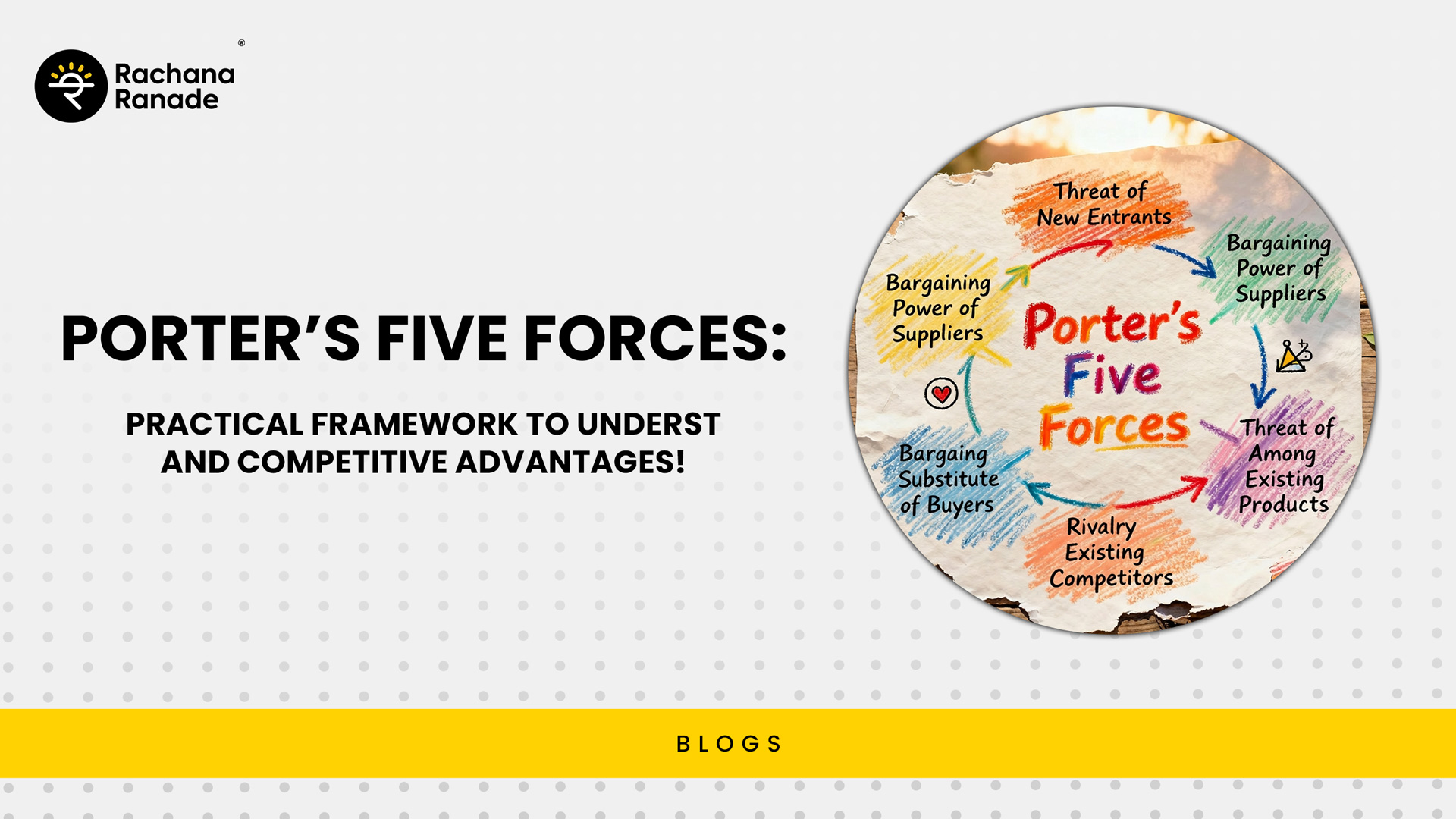
How to analyse industry power, company moat using Porter’s Five Forces and find evidence of it in the financial statements.
Introduction
Michael Porter’s Five Forces is one of the most powerful tools for understanding why some businesses consistently earn high profits while others struggle despite growth. Instead of focusing only on revenue or profit numbers, this framework helps investors and business leaders analyse the competitive structure of an industry and the durability of a company’s advantage. When a company operates in an industry where these forces are weak, profitability becomes easier to sustain over long periods.
1. Threat of New Entrants
This force measures how easy or difficult it is for new competitors to enter the industry. High entry barriers protect existing players and help them maintain pricing power and margins.
Barriers can include high capital requirements, strong brands, regulatory approvals, distribution networks, or economies of scale. Industries like banking, telecom, or stock exchanges typically have high entry barriers.
What to look for in financial statements
Consistently high return on capital employed over many years indicates strong entry barriers. Stable or improving operating margins also suggest limited new competition. High fixed asset intensity or heavy regulatory compliance costs visible in notes to accounts often discourage new entrants.
2. Bargaining Power of Suppliers
Suppliers have power when they can raise prices or reduce quality without losing customers. If a company depends on a few suppliers or on specialized raw materials, margins can come under pressure.
Supplier power is usually low when inputs are commoditized or when companies can switch suppliers easily. It is high when suppliers are concentrated or when switching costs are significant.
What to look for in financial statements
Rising raw material costs without a proportional increase in selling prices may signal strong supplier power. Stable gross margins over time suggest the company can negotiate well or pass on costs. Notes on supplier concentration also provide valuable clues.
3. Bargaining Power of Customers
Customers have power when they can demand lower prices, better quality, or additional services. This is common in industries with many similar competitors and price sensitive customers.
Customer power is low when products are differentiated, branded, or essential, and when switching costs are high. Software platforms, branded consumer goods, and niche industrial suppliers often enjoy lower customer bargaining power.
What to look for in financial statements
Healthy and stable gross margins indicate pricing power. Low sales concentration, where no single customer dominates revenue, reduces risk. Rising realization per unit and consistent revenue growth without margin pressure are strong indicators.
4. Threat of Substitutes
Substitutes are alternative products or services that solve the same problem. Even if competition within the industry is low, substitutes can cap pricing power and growth.
For example, airlines compete with trains, OTT platforms compete with cable TV, and electric vehicles are substitutes for internal combustion engines.
What to look for in financial statements
Slowing volume growth despite industry expansion may indicate substitution risk. Higher marketing and discounting expenses could signal efforts to defend market share. Companies with strong brand spending and R&D investment often protect themselves better against substitutes.
5. Competitive Rivalry Within the Industry
This force measures the intensity of competition among existing players. High rivalry leads to price wars, heavy marketing spend, and lower profitability.
Rivalry is intense when many players offer similar products, demand grows slowly, and exit barriers are high. It is lower when the industry is consolidated or when companies differentiate well.
What to look for in financial statements
Frequent margin fluctuations and high selling and advertising expenses point to intense rivalry. In contrast, steady margins, improving asset turns, and disciplined cost structures indicate a more rational competitive environment.
Why Strong Five Forces Are Powerful
When a company operates in an industry where entry barriers are high, supplier and customer power is low, substitutes are limited, and rivalry is rational, it can compound wealth for shareholders over decades. These businesses do not need heroic management decisions every year. The structure of the industry itself works in their favor.
Conclusion:
Porter’s Five Forces moves analysis beyond surface level numbers and into business quality. Financial statements act as evidence of these forces at work, reflected in margins, returns, and cash flows over time. For long term investors, understanding these forces helps identify companies with durable competitive advantages rather than temporary growth stories.